The world is defined by a profound asymmetry in technological access and comprehension. The Imagination Project, a 501(c)(3) nonprofit organization, operates to depolarize this by creating digestible educational resources in 50+ languages, as well as correcting the intellectual hazards of over-reliance.
The rapid proliferation of artificial intelligence technologies has outpaced the development of inclusive regulations, resulting in three distinct crises:
Approximately 80% of foundational codebases, peer-reviewed computer science literature, and international governance discourse occurs exclusively in the English language. This bars non-Anglophone populations from contributing to or contesting the development of technical standards.
The generation that must navigate a reshaped economy is they very one treated as a passive consumer base. Schools are outpaced by technology, leaving technology-savvy students to rely heavily on AI tools to supplement education. We are not an anti-AI organization, simply, pro-ethical usage.
It is difficult for emerging leaders and future adults to perceive their futures as tangible: this causes an inaction in the classroom. We hope to connect students to opportunities that replenish civic agency, providing a sense of educational meaning and intellectual excitement.
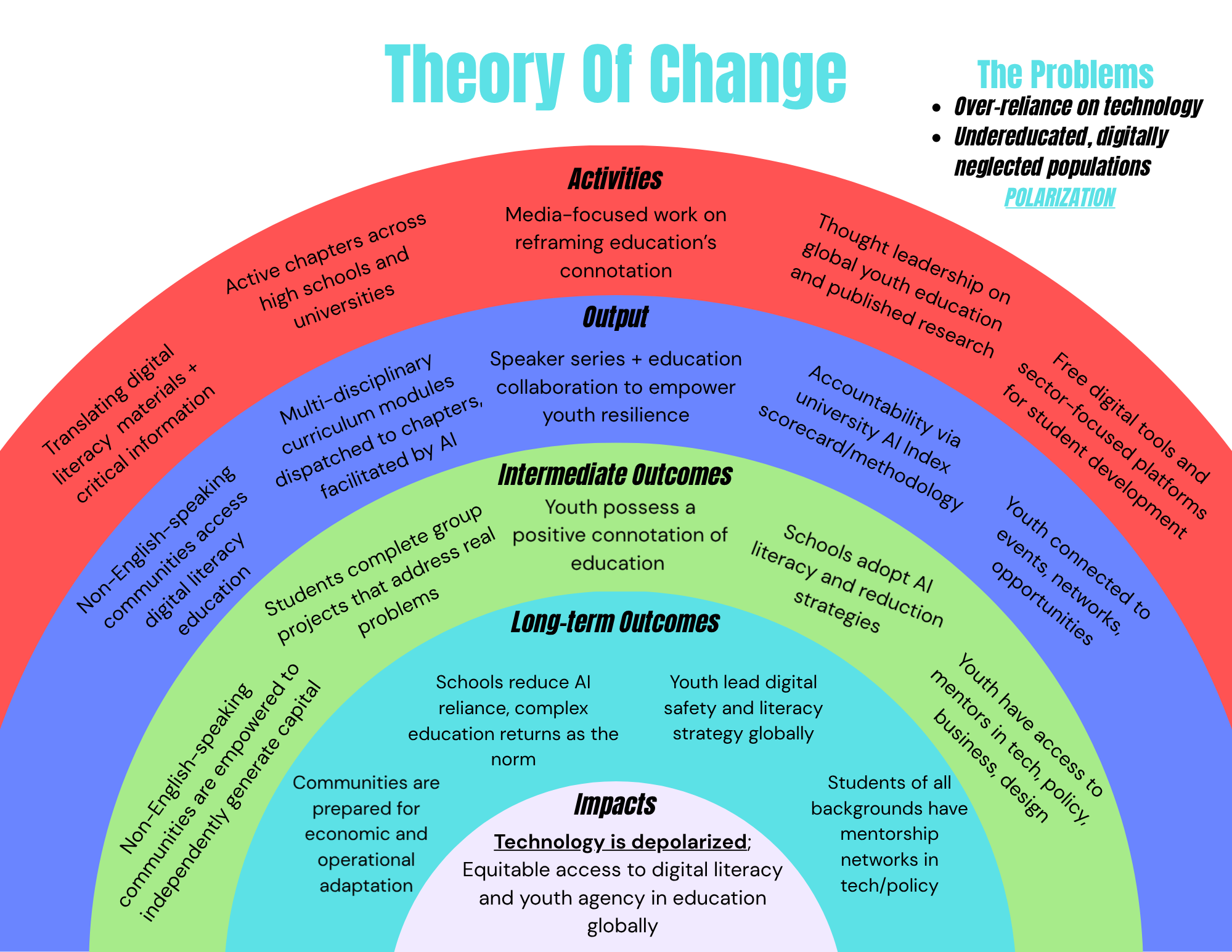
The Imagination Project executes a multi-layered intervention to dismantle these barriers and establish a more balanced distribution of technological authority.
1. By translating and culturally contextualizing digital literacy education into as many languages as possible, we eliminate the English-centric bottleneck.
2. We reject the premise that technical tool instruction constitutes comprehensive education.
3. We ground all advocacy in data.
Explore the programs →
 TIP'S TOC
We coordinate peer-to-peer student networks to translate, verify, and distribute academic AI materials into as many languages as possible, removing geographical and socio-economic access barriers.
We work with data scientists and investigate universities across the U.S. to produce a replicable AI Index. This acts as a form of accountability for higher education institutions to execute internal technological audits.
We will operate rigorous training environments that bypass fleeting technical skills to focus exclusively on policy analysis, career development, and real-world impact for students. Conversely, this programming in a global capacity offers skills for those without access to AI.
We intend to codify the insights from physical cohorts into a globally accessible digital platform. This platform will contain an asynchronous curriculum ledger, an executive mentorship matching engine, and more to be used as an semi-in-person after-school programming, summer camp, and year-round student development tool.
By 2030, TIP intends to make advanced digital literacy education available in more than just the world's major languages; an AI index trusted across US colleges; a hub where students across countries can find a mentor, a cohort, steps toward potential career paths, and finally, TIP alumni recieving invitations to share input on the future of education in a technology-facing world.
If it isn't translated, it isn't finished. TIP aims to reduce the growing global literacy divide.
We value and work to preserve the permanent human capabilities of reasoning, rhetoric, and thought.
Creativity, judgment, and critical thought are trainable, and irreplaceable.
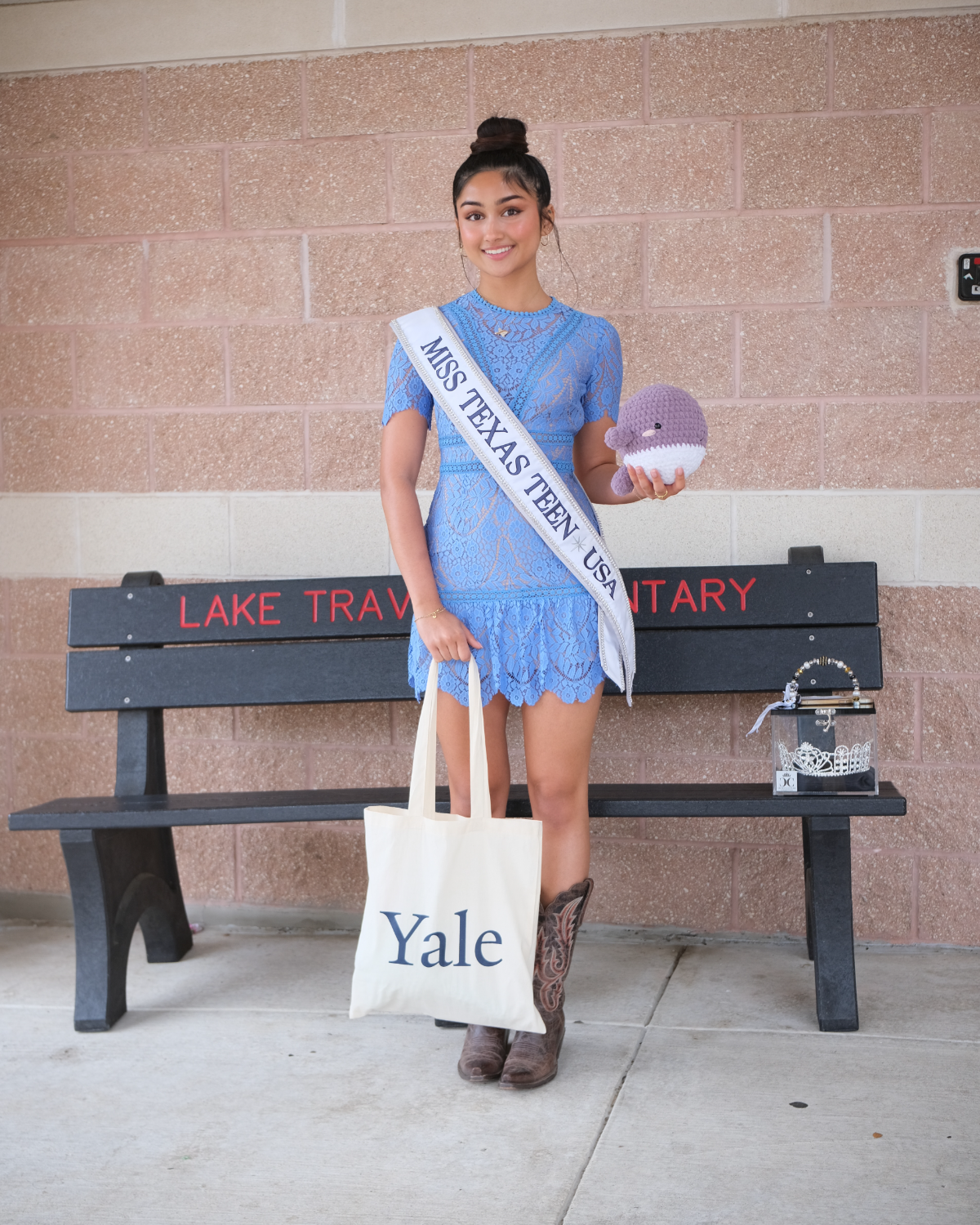 Founder
Founder · Yale University
Laika founded The Imagination Project in 2025, the same month she was crowned Miss Texas Teen USA. Within four months she had written and delivered the Dear Future Leader curriculum to more than five hundred elementary students across Texas, and the accompanying children's book (Dear Future Leader: The Wondermaker) now funds literacy and hygiene programs for over eight hundred women served by Manav Sadhna in Ahmedabad, India.
A former President of Texas DECA, she brings experience across business, cultural exchange, service, and the arts. She is currently a freshman at Yale University.
 Executive Director
Executive Director · Texas A&M University
Growing up in a half-Vietnamese, half-Italian household, Anabella developed a deep appreciation for tradition and culture. She joined The Imagination Project in 2026, bringing experience across the arts and medicine.
She founded a local Leo Club chapter that scaled across Austin, and is now a neuroscience major at Texas A&M University.
Companies, districts, researchers, journalists: reach out to us for in-depth reports on TIP, global digital literacy, and student dependence.
Partner with TIP → The
The